


13 Oct Planning Basement Remodels Around Residential Demolition
Remodeling a basement starts long before fresh drywall and new flooring go in. The first real step is safe, planned residential interior demolition that clears out what does not work and protects what must stay. When the tear-out is done right, the rest of the remodel moves faster, cleaner, and with fewer surprises.
Fall is a popular time for basement projects in New York and Connecticut. Temperatures are cooler, outdoor work is slowing down, and many families want extra living space ready before winter weather and holiday visits. With a smart demolition plan, you can turn a dark storage area into a warm, usable part of your home on a realistic timeline and budget.
Remodel Your Basement Faster with Smart Demolition Planning
A basement remodel is not just about finishes and furniture. It starts with clearing out old, damaged, or poorly built materials so the new work has a clean, safe base. That means thinking through demolition early, not as an afterthought.
Smart planning includes:
- Setting a target start and finish date that works with your family schedule
- Building a budget that includes demolition, debris hauling, and any needed repairs
- Choosing a demolition team that knows how to work in lived-in homes
When you partner with experienced pros for interior demolition, you get help spotting hidden issues, protecting the rest of your house, and keeping your remodel on track.
Know What Needs to Go Before You Start Framing
Before anyone swings a hammer, you should have a clear idea of what is staying and what is going. A walkthrough of the basement with a professional is the best way to plan this.
Common materials that often need to be removed include:
- Old wood paneling or thin partition walls
- Non-load-bearing walls that chop the space into small rooms
- Moldy or water-damaged drywall and insulation
- Outdated drop ceilings or stained ceiling tiles
- Worn or uneven flooring, like old carpet or glued-down vinyl
At the same time, it is very important to identify:
- Load-bearing walls and beams
- Support columns and posts
- Foundation walls and structural slabs
These should never be removed or altered without proper guidance from qualified pros. Your basement may also have utilities hidden behind walls or ceilings, such as electrical wiring, plumbing lines, HVAC ducts, and gas pipes. A good demolition plan is coordinated with the remodel design so that what you remove lines up with new framing, lighting, and plumbing layouts.
Planning Residential Interior Demolition for Basements
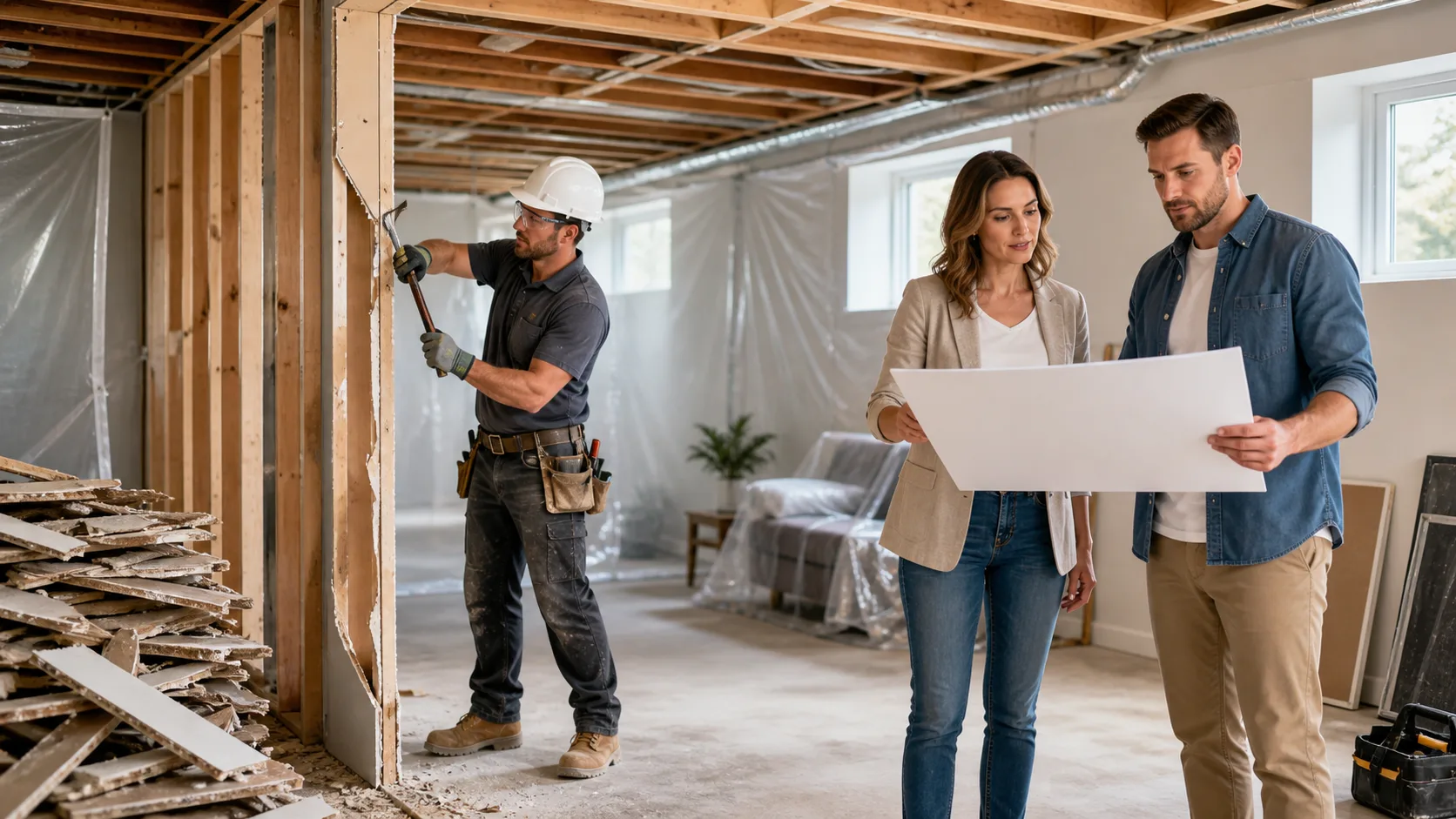
Residential interior demolition in a basement means carefully taking out interior finishes, partitions, built-ins, and fixtures while keeping the foundation and main structure intact. It is controlled, step-by-step removal, not random smashing.
A typical professional sequence looks like this:
- Confirm utility shut-offs or safe isolation for electrical, water, gas, and HVAC as needed.
- Set up dust and debris containment from the basement to main living areas.
- Remove finishes like ceiling tiles, drywall, flooring, and interior doors.
- Take down non-load-bearing walls that are part of the remodel plan.
- Pull and sort debris, then handle hauling and disposal.
- Sweep and rough clean so the space is ready for framing and trades.
Depending on your town in Westchester, Putnam, Dutchess, or nearby Connecticut, some interior demolition work may need permits or inspections. A professional team can help with code requirements and basic documentation so your project moves smoothly from demolition into construction.
Protecting Your Home From Dust, Noise, and Debris
Basement demolition happens close to bedrooms, living rooms, and home offices, so protection is key. Good containment and cleanup habits make a big difference in your day-to-day life during the project.
Common dust control steps include:
- Plastic containment walls around the work zone
- Zipper doors at basement entries for easy access
- Floor protection along pathways from the front door to the stairs
- Negative air machines or fans with filters to pull dust away from living spaces
Noise is part of demolition, but timing helps. Many families prefer louder work to happen during weekday hours when kids are at school or adults can plan calls around it. Talk through scheduling options early so you know what to expect.
Dumpster and hauling services also matter. When debris is removed quickly, your driveway and yard stay clearer, and materials are not piled up around the house. This cuts down on dust, tripping hazards, and multiple personal trips to the transfer station.
Safety and Hazard Checks Before Demolition Begins
Basements in older New York and Connecticut homes can hide some real hazards. Before demolition starts, it is smart to ask about:
- Suspected asbestos in old tile, pipe wrap, or joint compounds
- Lead paint on old wood trim, doors, or paneling
- Mold or mildew from past leaks or flooding
- Past DIY wiring or plumbing that may not be safe
When any of these are present or even suspected, testing or inspection by trained pros is important before materials are disturbed. This is one of the main reasons interior demolition is not a good DIY project. Proper licensing, insurance, protective gear, and safety procedures help protect homeowners, workers, and neighbors from unsafe conditions.
A reputable demolition company will focus on safety from start to finish, follow local rules, and keep clear communication about what they find behind the walls.
Timing Your Basement Demolition for Fall and Winter Use
If your goal is to enjoy a finished basement in the colder months, demolition needs to start early enough to leave room for framing, electrical, plumbing, and finishes. The good news is that interior work can usually continue even when the weather turns cold outside.
As a rough guide:
- Smaller basements with simple tear-outs may take a few days of demolition and hauling.
- Medium projects with multiple rooms, ceilings, and flooring removal may stretch into a week or a little longer.
- Larger basements or ones with heavy built-ins and lots of debris can take more time.
Coordinating with your general contractor or trades is helpful. The goal is to have demolition fully complete before framing crews arrive, so there is no overlap or delay. When the tear-out is planned around the remodel schedule, everyone knows when they can start their part.
How Demolition Experts NY Supports Basement Remodels
Our team handles a wide range of basement interior work, including interior wall removal, ceiling and flooring demolition, fixture and cabinet removal, and selective demolition around mechanical equipment and utility areas. We work carefully around items that must stay, like electrical panels, furnaces, and water heaters.
We also:
- Coordinate with homeowners, designers, and contractors on layout plans
- Sequence our work so other trades can follow right behind us
- Adjust for surprises that often come up in older homes in Westchester, Putnam, Dutchess, and nearby Connecticut towns
Local experience matters, especially with basements that have seen several remodels or repairs over the years. We are used to finding hidden walls inside walls, old framing styles, and past water issues, and we plan our demolition accordingly.
Basement Demolition FAQs for Homeowners
Here are answers to some common questions we hear about residential interior demolition in basements.
Q: How long does basement demolition usually take?
A: Most typical basements fall in the range of a few days to a bit over a week, depending on size, access, and how much material needs to be removed.
Q: Do I need a permit for basement demolition?
A: Some towns require permits for interior demolition, even if you are not touching structure. It depends on local rules and the scope of work. A professional company can help you understand what your town expects.
Q: Can I live in my home during demolition?
A: In most cases, yes. With containment, clear walkways, and planned work hours, families often stay in place. You will usually want to move fragile items, electronics, and anything stored in the basement or nearby rooms, and cover furniture that is close to traffic paths.
Q: What happens to all the debris, and can anything be recycled?
A: Debris is loaded out, taken off-site, and disposed of at proper facilities. Some materials may be separated for recycling where local options exist, depending on condition and type of material.
Q: How much dust and noise should I expect, and how is it controlled?
A: There will be some dust and noise, but with plastic barriers, negative air machines, careful cleanup, and planned working hours, the impact can be kept to a more manageable level for most families.
Get Your Basement Ready for Its Next Chapter
A successful finished basement starts with safe, thoughtful demolition. When old materials are removed carefully, the structure is protected, hazards are handled, and the space is cleared, the rest of the remodel has a solid foundation to build on.
Residential interior demolition is the first real step toward turning that underused basement into a comfortable family room, home office, gym, or guest space that feels like a true part of your home.
Get Started With Your Project Today
If you are ready to clear out and reimagine your space, our team at Demolition Experts NY is here to help with safe and efficient residential interior demolition tailored to your needs. We carefully plan every step to protect the rest of your property while preparing it for your next phase. Tell us about your project and timeline so we can provide a detailed, transparent estimate. To schedule a consultation or ask questions, simply contact us.
Sorry, the comment form is closed at this time.