

27 Oct Questions to Ask After a Demolition Estimate: Compare Bids and Scope
Lock in a Safe, Stress-Free Demo Before You Sign
The most important part of hiring residential demolition services starts after you get the written estimates, not during the first walkthrough. During that first visit, you are still talking in general terms. Once the estimates arrive, that is when details, fine print, and possible surprises become real.
Many homeowners in Westchester, Putnam, Dutchess, and nearby Connecticut towns collect two or three bids, lay them out on the table, and feel stuck. Prices are different, wording is different, and it is hard to know who is actually including what. That uncertainty can slow down your project or lead to stress later.
We want to share a simple set of follow-up questions you can ask every contractor after you receive the estimates. These questions help you compare bids fairly, clarify what is and is not included, avoid surprise add-ons, and lock in a clear scope and timeline, especially if you want work wrapped up before cold weather and shorter days affect the schedule.
Read Between the Lines of Every Demolition Estimate
A professional estimate for residential demolition services should not be one vague sentence and a big lump sum. At a minimum, you should see:
- A clear description of the scope, like which rooms or structures
- Square footage or room count that ties to that scope
- A basic disposal plan, including hauling and dumping
- Assumptions about permits or inspections
- An estimated timeline or project duration
- A simple payment schedule and terms
If any of that is missing, it does not always mean the contractor is bad, but it does mean you need to ask more questions. Red flags to watch for include:
- Vague line items like “demo as needed” or “prep area”
- No mention of how debris leaves your property
- Silence on permits or inspections, even for bigger work
- No details on how your home will be protected
- Very low bids with almost no description of the work
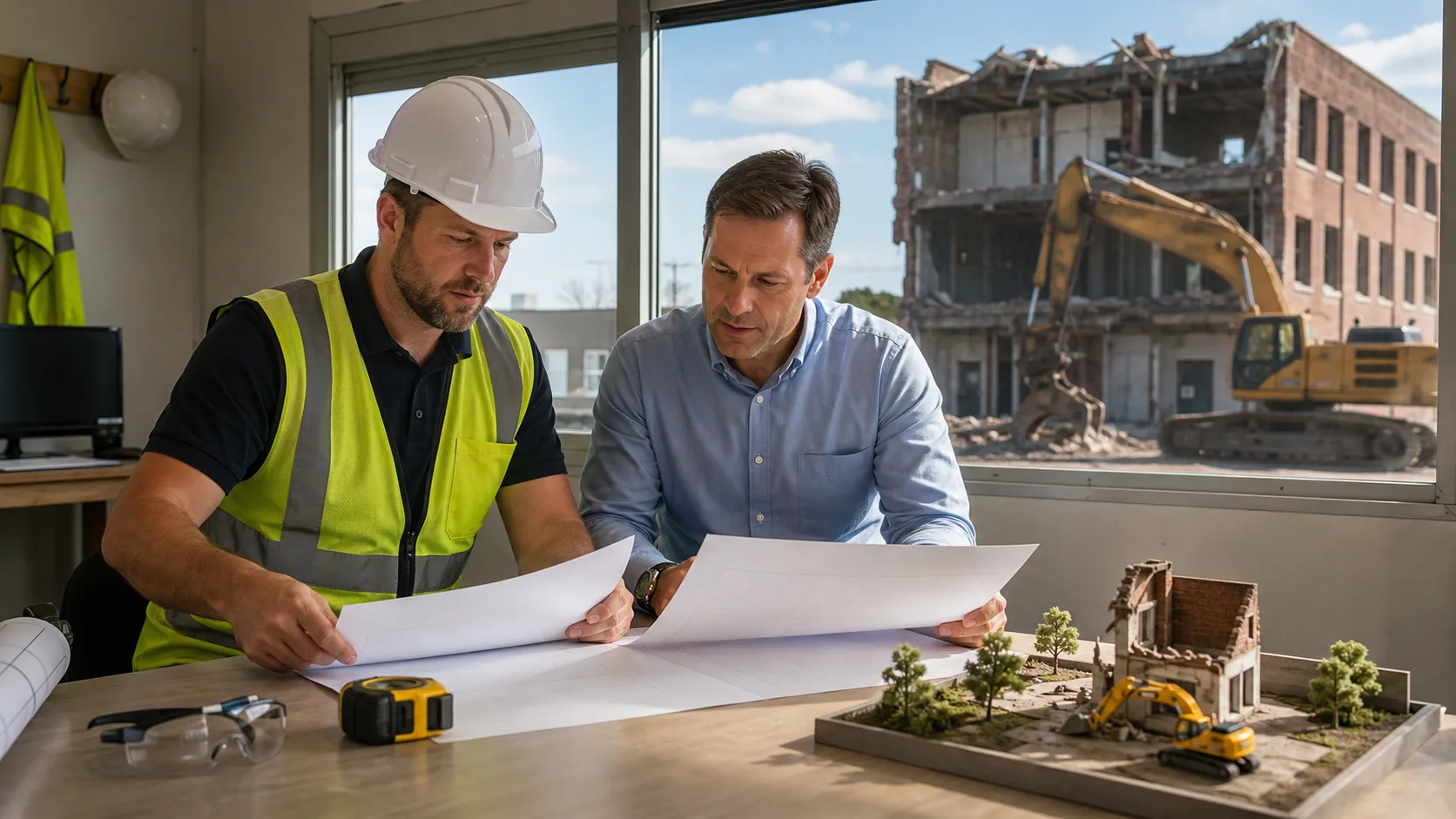
Once you have each estimate in front of you, ask every contractor to slow down and explain it, line by line. Helpful follow-up questions include:
- “Can you walk me line by line through this estimate and explain the work in plain language?”
- “What specific materials and areas are included, and what is clearly excluded?”
- “What assumptions did you make about access, utilities, and current conditions?”
If someone cannot or will not answer those questions clearly, that tells you a lot about how they might handle surprises once the job starts.
Clarify Scope, Exclusions, and Hidden Cost Triggers
In residential demolition services, scope is everything. Interior demo in a kitchen or bathroom is very different from structural work, taking down a garage, or removing a deck. Selective removal, like taking out a few walls or old cabinets, is not the same as a full gut. You may also need junk removal and dumpster rentals as part of clearing out a space before work slows in colder weather.
To protect yourself from scope creep and surprise change orders, ask each contractor:
- “What would count as ‘extra’ and trigger additional charges?”
- “How will unknowns like hidden water damage, extra layers of flooring, or thicker concrete be handled?”
- “Are dump fees, hauling, sorting, and recycling all included in this price?”
In older homes in Westchester and the Hudson Valley, lead paint or asbestos can also be part of the picture. Tight driveways, mature trees, stone walls, and steep yards can affect how equipment and dumpsters get in and out. Those regional details can change labor needs and how long the work actually takes.
Good follow-up questions here include:
- “If you find possible asbestos or lead, what happens next?”
- “Do you recommend any testing before we start, and who handles that?”
- “Do you have standard contingency pricing if conditions are worse than expected?”
You do not need every answer to be perfect, but you do need clear, honest explanations upfront.
Safety, Permits, and Protections You Must Confirm
Once you feel better about the scope, shift to safety and protection. Demolition is noisy, dusty, and messy by nature, but a careful contractor respects that you still live there.
Ask specific safety questions such as:
- “What safety plan do you follow for dust, debris, and noise in an occupied home?”
- “How will you protect my floors, stairs, landscaping, driveway, and neighbors’ property?”
- “Who supervises the crew on site, and will I have a single point of contact?”
For our area, local rules can vary from town to town. Some places are strict about dumpster placement, work hours, and street access. Others have specific requirements for inspections, especially if structural work or detached structures are involved.
Be sure to ask:
- “Who pulls the permits and schedules inspections?”
- “Are you familiar with my town’s rules on dumpsters, work hours, and street access?”
Before you approve any bid, confirm that the company is fully insured. Ask for:
- Proof of liability insurance
- Proof of workers’ compensation coverage
- Certificates that list your property as the certificate holder, if possible
- Written confirmation that debris goes to licensed disposal or recycling facilities
Everything important should be in writing, not just promised in a quick phone call.
Compare Bids Apples-to-Apples and Choose with Confidence
It is common to end up with three estimates that look like they are for three different projects. To compare them fairly, try to standardize the scope.
Here is one simple way to do it:
- Make a list of the exact rooms, structures, and items you want removed
- Confirm each estimate includes removal and disposal of everything on that list
- Ask every contractor to price the same optional items, like junk removal, dumpster rentals, or minor framing repairs if needed
Once the scope is aligned, create a basic comparison checklist. For each contractor, rate:
- Scope completeness and detail
- Clarity of exclusions and “extras”
- Safety and protection plan for your home and neighbors
- Timeline and realistic start date
- Payment terms and when each payment is due
- Communication style and comfort level during your follow-up calls
- Reputation or reviews you can find from other local projects
For fall projects, timing can matter just as much as price. As weather cools, daylight hours shrink, and it can be harder to move dumpsters or equipment on icy or muddy ground. A detailed, slightly higher estimate from a reliable residential demolition services company can often be a better value than a vague, low-number bid that grows later.
A family-owned, fully insured local company that works in your counties every day will usually have a better handle on regional rules, older housing stock, and seasonal challenges than someone who does not know the area well.
Seasonal Prep and FAQ Guide for Your Fall Demolition
If you want your demolition done before winter slows everything down, try to start the process early in the fall. Schedules fill up fast once people start planning indoor projects. Getting on the calendar early can help you avoid delays from weather, frozen ground, or clogged driveways.
A simple action plan looks like this:
- Collect at least two written estimates, three if possible
- Use the follow-up questions in this guide with each contractor
- Ask for revised bids if scope or exclusions change after those talks
- Review everything calmly, then choose who to hire only after you feel clear and comfortable
Here are some common residential demolition services questions that many homeowners in our area ask when planning a fall project:
- What residential demolition services should be included in a fall renovation project?
- How do I compare residential demolition services estimates from different contractors?
- What insurance and permits are required for residential demolition services in Westchester and nearby Connecticut towns?
- How are hazardous materials handled during residential demolition services for older homes?
- Do residential demolition services usually include junk removal and dumpster rentals, or are those separate costs?
At Demolition Experts NY, we know that clear answers and a solid plan make your project less stressful from the first swing to the final sweep-up. When you slow down, ask the right questions after you get those estimates, and insist on written clarity, you give yourself the best chance at a safe, predictable demolition and a smoother renovation to follow.
Get Started With Your Project Today
If you are planning a safe and efficient teardown, our team at Demolition Experts NY is ready to help with expert residential demolition services tailored to your property. We walk you through permitting, scheduling, and debris removal so your next phase can start on time. To discuss your timeline and get a detailed estimate, simply contact us today.
Sorry, the comment form is closed at this time.