

29 Sep Hiring Demolition Contractors in My Area for Water-Damaged Homes
Protecting Your Water-Damaged Home with Expert Demolition
Water damage hits fast and feels overwhelming. A storm, a burst pipe, a flooded basement, suddenly you are staring at soaked walls, ruined floors, and a smell that will not go away. What you do in the next few days matters for your family’s safety and for your home’s future.
Professional demolition is often the first real step on the road back. When done right, it removes ruined materials, cuts off mold before it spreads, and gets your space ready for safe rebuilding. When done wrong or too slowly, moisture lingers, hidden damage grows, and repair costs keep rising.
Many people start searching for “demolition contractors in my area” and are not sure what to expect. Homeowners and business owners in Westchester, Putnam, Dutchess, and nearby Connecticut need a local, family-owned, fully insured team they can trust in an emergency. In this article, we will walk through how water damage harms your home, when demolition is needed, how interior and selective demolition work, what to look for in a contractor, and what to expect from start to finish, especially as the weather turns cooler and wetter.
How Water Damage Harms Your Home’s Structure
Not all water damage is the same. The type of water changes how your building materials react and what needs to be removed.
- Clean water, like from a burst supply line or sink overflow, can still soak drywall, insulation, and flooring. If it sits too long, it stops being “clean.”
- Gray water, like from dishwashers or washing machines, carries soaps and dirt that soak deeper and may leave behind residue and odor.
- Black water, like sewage or dirty floodwater, is unsafe and can contaminate almost every surface it touches.
Even when the surface looks dry, there can be hidden problems. Moisture can remain trapped behind walls and under flooring, which can cause subfloors to swell and weaken. Over time, floor joists can start to rot, fasteners can rust, and framing can be damaged. Wet walls can also create electrical risks, and mold can grow quickly in warm, humid late summer and early fall.
Waiting to “see if it dries out” often backfires. As temperatures drop, moisture can get locked inside walls and under floors. That can turn a small tear-out into a much bigger demolition later and may create questions with insurance about why cleanup was delayed.
When You Need Demolition Contractors in My Area
Some signs that full or partial demolition is needed are easy to spot, others are not. Call a professional if you notice:
- Buckling or spongy floors
- Sagging or stained ceilings
- Crumbling or soft drywall
- Strong, musty odors that do not go away
- Visible mold on walls, trim, or furniture
- The same area getting wet again and again
Trying to rip out materials on your own can seem cheaper, but water-damaged buildings are not simple. In older New York homes and buildings, there can be asbestos in flooring or insulation and lead in paint. There is also the risk of cutting into structural supports or live electrical lines.
Professional demolition contractors bring the experience and controls needed to work safely and efficiently. They know how to protect structural elements, set up dust and debris control, handle potential asbestos or lead concerns safely, sort and move heavy, wet debris, and haul and dispose of materials correctly.
A local, fully insured family business has another advantage. We know the neighborhoods, the age of many homes, typical construction methods, and local code and permit needs. We can respond quickly after storms, and we often work directly with nearby restoration contractors, plumbers, and adjusters so your project keeps moving.
Interior and Selective Demolition After Water Damage
After water damage, interior demolition focuses on the inside of the building while trying to keep the main structure intact. That can include removing:
- Water-soaked drywall and insulation
- Damaged ceilings and trim
- Ruined flooring and subfloor sections
- Wet cabinets, vanities, and built-ins
- Contaminated fixtures and finishes
Selective demolition is more targeted. Instead of gutting an entire floor, we remove only what is needed, for example:
- Cutting out the lower few feet of drywall, where floodwater reached
- Stripping one room or one side of a wall
- Removing damaged exterior siding or one section of a deck
- Taking out cabinets while keeping walls and ceilings
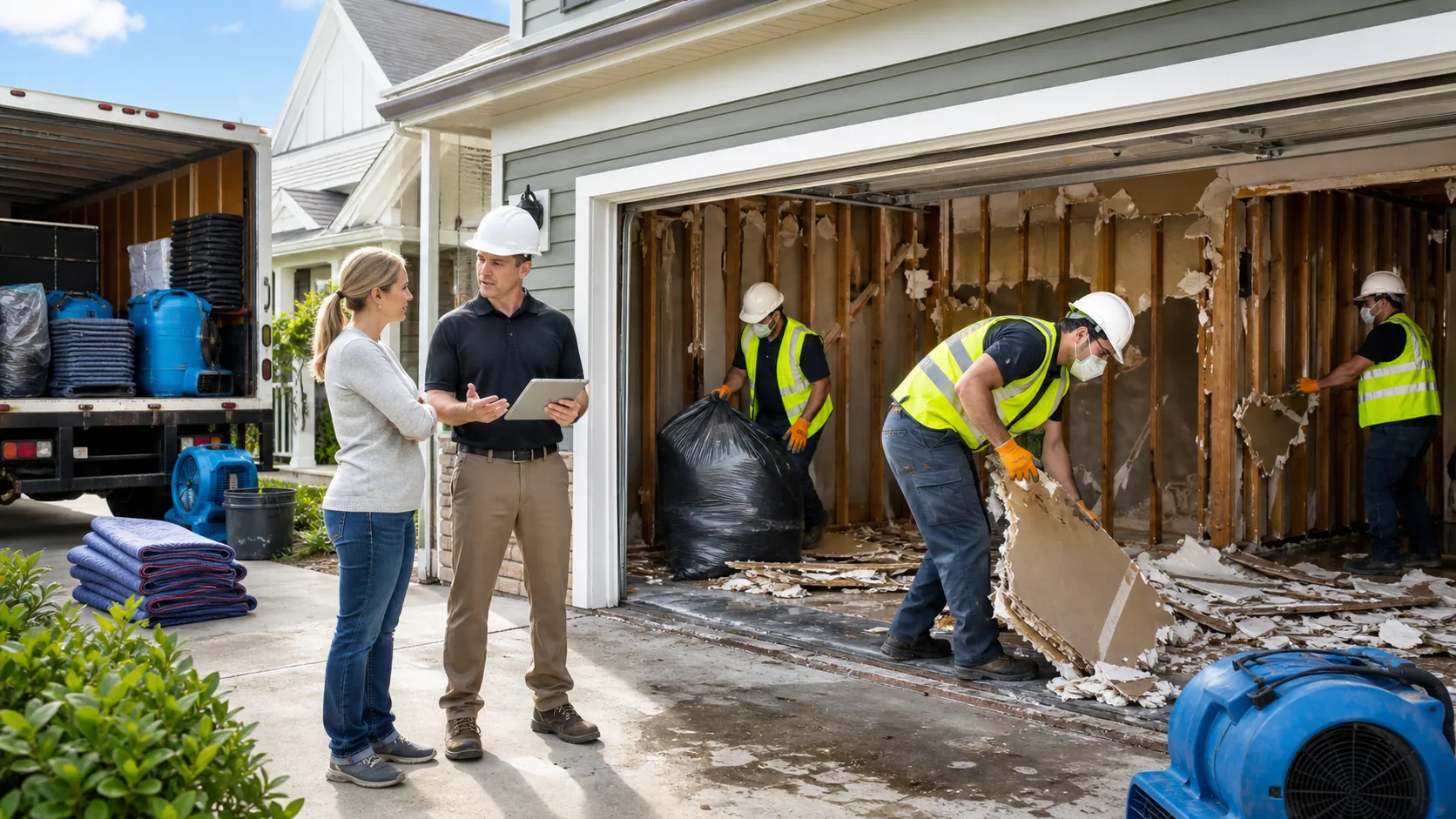
A professional crew starts with careful planning. We may use moisture readings and visual checks to map how far water has spread. Once we understand the scope, we set up the site so the work stays controlled and the rest of the property is protected:
- Containment, like plastic barriers to keep dust and debris in one area
- Floor and furniture protection where items can be saved
- Safe removal paths to carry out heavy, wet materials
- Proper debris loading into dumpsters or trucks
By the end, the space should be cleared of ruined materials, swept and cleaned up, and open for drying, mold remediation if needed, and then rebuilding.
Choosing the Right Demolition Contractors in My Area
When you are stressed and tired from water damage, it is tempting to hire the first person who says they can start. Slowing down enough to pick the right company will save time and trouble later. Look for:
- Full insurance coverage and any required local registrations
- Good local reviews and word-of-mouth
- Clear written estimates and scope of work
- Experience with water-damaged homes and businesses
It also helps to ask a few direct questions so you know how the company works and what support you can expect:
- How fast can you respond in an emergency?
- Do you also offer dumpster rentals and junk removal?
- How will you protect the parts of my home that are still dry?
- Will you help with photos, notes, or documents for my insurance company?
- Who will be on site each day, and who is my main contact?
Red flags are usually related to unclear communication or a lack of basic business protections. Be cautious if you see:
- Vague or changing pricing with nothing in writing
- No proof of insurance when asked
- Pressure to start work without talking about permits
- No plan for where debris will go or how it will be handled
What to Expect Before, During, and After Demolition
Before demolition, you can expect a site visit and inspection. The contractor should walk the space, ask questions about what happened, and look for both obvious and hidden damage. Together, you will review the scope of work (what is being removed and what is staying), a general timeline, any needed permits, and how to prepare, such as moving valuables and planning for noise or limited access.
During demolition, a typical day includes crew arrival, setup, and safety checks. You will notice cutting, prying, and hauling of wet materials, plus the sound of tools and dumpsters being loaded. A good crew:
- Keeps walkways as clear as possible
- Manages dust and debris
- Updates you on progress and any surprises
- Does basic cleanup at the end of each day
After demolition is complete, the team removes the last debris and equipment. There should be a walkthrough so you can see what was done. Moisture checks help confirm that materials left in place are ready for drying and restoration. At this point, the area is usually open and clean enough for the next trades to come in and start rebuilding.
Seasonal Readiness and Common Water-Damage Demolition FAQs
In the Hudson Valley and nearby Connecticut, fall can bring heavy rain, leftover tropical systems, and nor’easters. As temperatures start to drop, gutters full of leaves, poor drainage, and uninsulated pipes can turn into big water problems. Some simple prevention steps include:
- Keeping gutters and downspouts clear and flowing away from the house
- Checking grading so water runs away from your foundation
- Testing sump pumps before big storms
- Insulating exposed pipes in basements, crawlspaces, and unheated areas
Building a relationship with a trusted local demolition company before you need one can make a big difference. When a storm hits or a pipe bursts, you already know who to call, and they already know your property and your expectations.
Here are a few common questions people ask about hiring demolition contractors in my area after water damage:
- How do I find trustworthy demolition contractors in my area after a flood?
Search locally, ask neighbors or other contractors who they trust, and always verify insurance. Be careful about people who show up right after a storm with no local history or references.
- Do I always need demolition after water damage, or can I just dry it out?
Light, clean water damage that is handled quickly may only need drying. When materials are saturated, contaminated, or starting to break down, demolition is usually needed to remove what cannot be saved.
- What affects the cost of demolition for a water-damaged home?
Costs change with the size of the area, type of water, how hard the space is to reach, permit needs, and how much debris must be hauled and disposed of.
- Will my insurance cover demolition and debris removal after a water leak or storm?
Many homeowners policies do include some coverage for demolition and debris removal related to a covered loss. Good documentation and a contractor who is used to working with adjusters can help the process go smoother.
- How long does interior demolition for water damage usually take?
Smaller projects can often be completed in a short period, while larger multi-room or multi-floor projects take longer. Access to the site, amount of contents, and discovery of hidden damage can speed up or slow down the work.
Water damage feels scary, but with fast, professional demolition and cleanup, you can protect your home’s structure and air quality and get ready for a safe rebuild. A local, family-owned, fully insured team like Demolition Experts NY can help you move from soaked and stressful to clean, cleared out, and ready for what comes next.
Get Started With Your Project Today
If you are looking for reliable demolition contractors, our team at Demolition Experts NY is ready to help you plan and complete your project safely and on schedule. We take the time to assess your site, explain your options, and provide a clear, detailed estimate before any work begins. Reach out through our contact page so we can review your needs and get your demolition project moving in the right direction.
Sorry, the comment form is closed at this time.